This is the worst day of my life! My stupid brother closed the hole of my tree! Now the kids are no longer going to recibe my presents, I believe that they now knew that the gifts were sended by me and that is the only reason for being calm right now. I hope that now that the children are older and because of my gifts they will no longer fear me, I really want to be their friends. My dreams about playing with them are happening more frequently, now sleeping is the best part of the day.
Arthur Radley
jueves, 30 de agosto de 2012

Diary of Boo Radley: Part 2
I´ve been watching this kids all summer and they´re now going back to school, I had so much fun watching this kids playing with me as the "principal character" of their games. I understand them to fear me, I have a very weird story behind me, but nowadays my only worry is this children to be happy. I´m planing to send them gifts on the hole of my tree so they can enjoy and stop fearing me. I´ve been dreaming about being a child again and go outside to play with Scout, Dill and Jem.
Arthur "Boo" Radley
Arthur "Boo" Radley
Diary of Boo Radley: Part 1
I really don´t know what date is today, that´s why I didn´t put it above. Another day inside of my house, I hope I´m not crazy right now because of spending the most part of my life in the same house without seeing people and without having a normal life. I was really planing to kill myself... but three kids playing on the front house called my atention and I can´t stop thinking about them, they make me remember the most happy times of my life, when I was a little boy and used to play in the tree of the front yard of my house. I saw this kids playing all day without geting tired, they look a lot to my house and whisper when they are looking, I believe that they may whisper about me and that makes me feel important and happy.
Arthur Radley
Arthur Radley
"The Help" Assignment

THE HELP ACTIVITY
We watched in class the movie "The Help" for undersanding in a better way the context of "To Kill a Mockingbird" and understand the live in that times. Now I will answer a few questions about the movie.
1. In your own words, write what was meant by "separate but equal." How did people in Jackson, Mississippi - including the ladies of the Junior League in "The Help" - try to apply this principle?
I think it was its a phrase to describe the situation at that times. White people now accepted that black people have some rights as humans. But they cannot accept them to live together, that´s why they have the same things but separated.
2. Do a simple online research about Jim Crow Laws. Identify what outcomes - forced upon domestic workers - were present in "The Help".
The Jim Crow laws were state and local laws in the United States enacted between 1876 and 1965. They mandated de jure racial segregation in all public facilities in Southern states of the former Confederacy, with, starting in 1890, a "separate but equal" status for African Americans. The separation in practice led to conditions that tended to be inferior to those provided for white Americans, systematizing a number of economic, educational and social disadvantages. De jure segregation mainly applied to the Southern United States. http://en.wikipedia.org/wiki/Jim_Crow_laws
I think that practical conditions of black people considered inferior and being constantly discriminated, forced domestic workers in the movie to do things against white people that took advantage of this laws.
3. Explore the themes in "The Help" and develop your ideas by continuing the following sentence:
The theme that I most liked of the movie is the "atittude of taking risks" by the maids of the movie. Even in the situation of being killed they take the risks that are necessary to do what they want in their lives, this aspect is important always in every sense of life.Chapters 15, 16, 17: Analysis Questions
1. What is the Ku Klux Klan? What do you think of Atticus' comment about it?
It´s a group of people that discriminate a lot of people, specially black people. They used a sort of triangle hat to recognize themselves. Atticus says that he really don´t care about them, and didn´t fear for their attacks, considering that Maycomb is only a little town.
2. How does Jem react when Atticus tells him to go home, and why?
He doesn´t obey him. Because of his role of big brother, he didn´t wanted to leave his father alone, considering that he was in a dangerous situation.
3. What persuades the lynching-party to give up their attempt on Tom's life?
I think that Scout intervention, with her innocence by talking to one man that she knew and don´t understanding well the situation.
4. What sort of person is Dolphus Raymond and what is your opinion of him?
I think that he ir a very complicate man. People have to say what they think and not living with appereances like a coward he is.
5. How does Reverend Sykes help the children see and hear the trial? Is he correct in doing so?
He left the children on the black people place to see the trial. I think that it was good because the children were among people that loved his father and they had the chance to realize the strong situation of discrimination.

It´s a group of people that discriminate a lot of people, specially black people. They used a sort of triangle hat to recognize themselves. Atticus says that he really don´t care about them, and didn´t fear for their attacks, considering that Maycomb is only a little town.
2. How does Jem react when Atticus tells him to go home, and why?
He doesn´t obey him. Because of his role of big brother, he didn´t wanted to leave his father alone, considering that he was in a dangerous situation.
3. What persuades the lynching-party to give up their attempt on Tom's life?
I think that Scout intervention, with her innocence by talking to one man that she knew and don´t understanding well the situation.
4. What sort of person is Dolphus Raymond and what is your opinion of him?
I think that he ir a very complicate man. People have to say what they think and not living with appereances like a coward he is.
5. How does Reverend Sykes help the children see and hear the trial? Is he correct in doing so?
He left the children on the black people place to see the trial. I think that it was good because the children were among people that loved his father and they had the chance to realize the strong situation of discrimination.
Chapters 12, 13, 14: Analysis Questions
1. Comment on Jem's and Scout's visit to First Purchase Church. What does Scout learn about how black people live?

First of all they realize the reality of this people; the extreme state of povery, most people didn´t know how to read, the different accent that they used (even Calpurnia) and that they were well recibed by this people.
2. Explain why Calpurnia speaks differently in the Finch household, and among her neighbours at church.
Because all people in church speaked with the "black accent" and they could feel ofended if they realize that Calpurnia talks in the "white way".
3. Aunt Alexandra thinks Scout is "dull" (not clever). Why does she think this, and is she right?
Because she didn´t like the way Scout thought, so she was considered a dull by her. I think that Scout was a very clever girl and Alexandra judge her only because of thinking differently.
4. How does Aunt Alexandra involve herself in Macomb's social life?
She invited people to Atticus house and organized groups of tea with other women. After a while she became part of the social live in town.
5. Comment on Aunt Alexandra's ideas about breeding and family, in contrast to Atticus' visions. Who's right, do you think? Why?
Aunt Alexandra had traditional ideas about family and wanted for Scout to become a lady. On the other hand, Atticus wanted to raise his children on a more free way with a lot of morality involved. I think that aunt Alexandra is a good influence for Scout in that way, so a mix of the two visions I think is the best.
6. Comment on Atticus' definition of rape. How suitable is this definition as an answer to Scout?
He didn´t explain the action well to Scout, maybe to hide her a little from the adults world. I think is suitable for a girl of her age.
Essay Writing: Description of Task and Comments
By all this week we spend our time writing an essay about the part 1 of "To Kill a Mockingbird". We had some topics to choose and I did the one that I founded more interesting: "
What impact does setting have on your understanding of the central ideas or themes presented in Harper Lee's "To Kill a Mockingbird"?" With this topic I decided to analyze and respond the next thesis statement: "The setting of the story is very close to reality, that´s what makes us understand very good the central ideas and themes".

For proving my thesis statement I presented three arguments; The historical situations (economy), the live of the author similar to the story and the society in that times. Finally I made a conclusion about all the work and a synthesis of each argument.
I hope to have done a good work, but I believe I could have did it better...
miércoles, 29 de agosto de 2012
TKM Part 1: Analysis Questions
1. What is the reason for the author's choice of a young narrator?
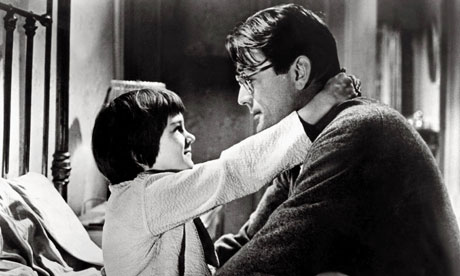
For represent herself on her childhood with Scout as a character, it also gives innocence to the narratios and an evolution of the character´s perspective.
2. How does Jem and Scout's views of Boo Radley change during part 1 of the book?
At this part of the book they are very innocent children so they feared him and also felt curiosity about him.
3. Atticus tells the children several times that they need to walk in someone else's shoes before judging the person. Describe times when Atticus, Scout or Jem walk in someone else's shoes. How does this change how they view the situations? What role does this advice play in sympathy and compassion?
The advice from Atticus to the children made them think in a different way from the rest of the normal white society. They understand a lot of new things, feeling sorry for poor and black people. For example for the Cunningham family.
4. How do you think Atticus managed his role as a single parent?
Atticus took his role as a single parent by teaching a strog sense of morality and justice, also commiting them to "put on the other person shoes"
5. Discuss race issues in part 1 of the book.
A good example for race issues is when the children entered to the Radley´s house and escaped, a black man who was only passing by got shoted by Arthur´s brother without doing nothing.
6. From your reading of part 1, What does To Kill a Mockingbird teach us about how people cope with issues of race and class? Do you classify people in your world as different "folks?" Do you see those sort of distinctions today?
In my reading I could notice the notable racism on the United States, I think that the author is making a critic for the society, defending the values of equality and non discrimination. On my actual world this problems are still happening, Chile is a country with notable differences between classes and we tend to discriminate a lot.
7. Who is your favorite character from part 1 and why?
Atticus Finch. Because he is a very moral person and an example of a good citizen.
For represent herself on her childhood with Scout as a character, it also gives innocence to the narratios and an evolution of the character´s perspective.
2. How does Jem and Scout's views of Boo Radley change during part 1 of the book?
At this part of the book they are very innocent children so they feared him and also felt curiosity about him.
3. Atticus tells the children several times that they need to walk in someone else's shoes before judging the person. Describe times when Atticus, Scout or Jem walk in someone else's shoes. How does this change how they view the situations? What role does this advice play in sympathy and compassion?
The advice from Atticus to the children made them think in a different way from the rest of the normal white society. They understand a lot of new things, feeling sorry for poor and black people. For example for the Cunningham family.
4. How do you think Atticus managed his role as a single parent?
Atticus took his role as a single parent by teaching a strog sense of morality and justice, also commiting them to "put on the other person shoes"
5. Discuss race issues in part 1 of the book.
A good example for race issues is when the children entered to the Radley´s house and escaped, a black man who was only passing by got shoted by Arthur´s brother without doing nothing.
6. From your reading of part 1, What does To Kill a Mockingbird teach us about how people cope with issues of race and class? Do you classify people in your world as different "folks?" Do you see those sort of distinctions today?
In my reading I could notice the notable racism on the United States, I think that the author is making a critic for the society, defending the values of equality and non discrimination. On my actual world this problems are still happening, Chile is a country with notable differences between classes and we tend to discriminate a lot.
7. Who is your favorite character from part 1 and why?
Atticus Finch. Because he is a very moral person and an example of a good citizen.
Chapter 1 Analysis Questions
1- What do you learn in this chapter about Maycomb, Atticus Finch and his family?
I learned that the Finchs were a family that scaped from religious persecutions from England and moved to Alabama, US. The family formed a farm called "The Finch´s land". Atticus Finch born some generations next, he became a lawyer and moved to the town of Maycomb, he got married and had two sons; Jem and Scout.
2- Describe Calpurnia as Scout depicts her in Chapter 1:
An African American woman, disciplined, with good relationship with Atticus and according to Scout "quite tyrannical".
3- What does Dill dare Jem to do? Dill dares Jem to touch the mysterious "Radley place".
4- The townspeople of Maycomb have some fears and superstitions about the Radley place. Describe these fears and superstitions.
The townspeople beleaved that in the Radley´s place lived Boo (children´s nickname) or Arthur Radley. They thought that he was a crazy boy who had been punished by his father for among 15 years because of having problems with the police and trying to kill his father with a pair of scissors. Since then, no one has seen him.
5- How important is bravery to Jem?
I think it´s very important because he is always trying to demostrate bravery to her sister.
6- What do you notice about the narrative voice and viewpoint of the story?
It´s somehow weird for me as a reader to know that the narrator is a little girl, I notice that she is very intelligent and has a very innocence point of view from life.

I learned that the Finchs were a family that scaped from religious persecutions from England and moved to Alabama, US. The family formed a farm called "The Finch´s land". Atticus Finch born some generations next, he became a lawyer and moved to the town of Maycomb, he got married and had two sons; Jem and Scout.
2- Describe Calpurnia as Scout depicts her in Chapter 1:
An African American woman, disciplined, with good relationship with Atticus and according to Scout "quite tyrannical".
3- What does Dill dare Jem to do? Dill dares Jem to touch the mysterious "Radley place".
4- The townspeople of Maycomb have some fears and superstitions about the Radley place. Describe these fears and superstitions.
The townspeople beleaved that in the Radley´s place lived Boo (children´s nickname) or Arthur Radley. They thought that he was a crazy boy who had been punished by his father for among 15 years because of having problems with the police and trying to kill his father with a pair of scissors. Since then, no one has seen him.
5- How important is bravery to Jem?
I think it´s very important because he is always trying to demostrate bravery to her sister.
6- What do you notice about the narrative voice and viewpoint of the story?
It´s somehow weird for me as a reader to know that the narrator is a little girl, I notice that she is very intelligent and has a very innocence point of view from life.
"To Kill a Mockingbird": Harper Lee's Life and Times
Harper Lee was born on April 28, 1926, in Monroeville, Alabama. In 1959 she finished the manuscript her Pulitzer Prize-winning best-seller To Kill a Mockingbird. Soon after, she helped fellow-writer and friend write an article forThe New Yorker which would later evolve into hTruman Capote is nonfiction masterpiece. On her childhood she was the youngest of four children, she grew up as a tomboy in a small town. Her father was a lawyer, a member of the Alabama state legislature, and also owned part of the local newspaper. For most of Lee’s life, her mother suffered from mental illness. In high school, Lee developed an interest in English literature. After graduating in 1944, she went to the all-female Huntingdon College in Montgomery. Lee stood apart from the other students—she could have cared less about fashion, makeup, or dating. Instead, she focused on her studies and on her writing. Lee was a member of the literary honor society and the glee club.After some time working on her adulthood, she quit her job and devoted herself to her craft. The Browns also helped her find an agent, Maurice Crain. He, in turn, was able to get the publishing firm interested in her first novel, which was first titled Go Set a Watchman, thenAtticus, and later To Kill a Mockingbird. Working with editor Tay Hohoff, Lee finished the manuscript in 1959. http://www.biography.com/people/harper-lee-9377021?page=2sing
For studying the context of production of "To Kill a Mockingbird", we will now research for the author´s life and times.
Harper Lee was living in a time when the United States had a lot of On On this times when Harper Lee lived the United States was passing through a lot of changes; the World wars, the depression, the racism and a lot of problems in that times. Lee was against racism, and wanted justice and equality for all people, that´s why her book had so much success.

martes, 28 de agosto de 2012
Context of production and reception
Now we will start getting deeper in literature, and the first thing we did was learning about the two type of contexts and their definitions:
CONTEXT OF PRODUCTION: Critical positions, historical facts, biographical aspects of the author's life.
CONTEXT OF RECEPTION: Once you approach a work as a reader, the meaning that is communicated, that is sent from the text to you, is influenced by everything that you bring to it, from your reading to your personal experiences and biases.
Miss Carla Chavez went to our class to introduce and teach us this contexts, she gave the example of the book we´re reading "To Kill a Mockingbird" In this case it would be:
"TKM"
Context of production: Harper Lee wrote this book on the 1960´s and she actually lived her childhood on the 30´s in Alabama, US. The US was passing through the Cold War, the author wrote this book for representing the society of that time and place, against the racism.
Context of reception: We are actually the readers, we know now by reading the book the author´s perspective of this society and we have an idea of what is like. Living in Chile on the XXI century.

CONTEXT OF PRODUCTION: Critical positions, historical facts, biographical aspects of the author's life.
CONTEXT OF RECEPTION: Once you approach a work as a reader, the meaning that is communicated, that is sent from the text to you, is influenced by everything that you bring to it, from your reading to your personal experiences and biases.
Miss Carla Chavez went to our class to introduce and teach us this contexts, she gave the example of the book we´re reading "To Kill a Mockingbird" In this case it would be:
"TKM"
Context of production: Harper Lee wrote this book on the 1960´s and she actually lived her childhood on the 30´s in Alabama, US. The US was passing through the Cold War, the author wrote this book for representing the society of that time and place, against the racism.
Context of reception: We are actually the readers, we know now by reading the book the author´s perspective of this society and we have an idea of what is like. Living in Chile on the XXI century.
Literature: Texts and contexts
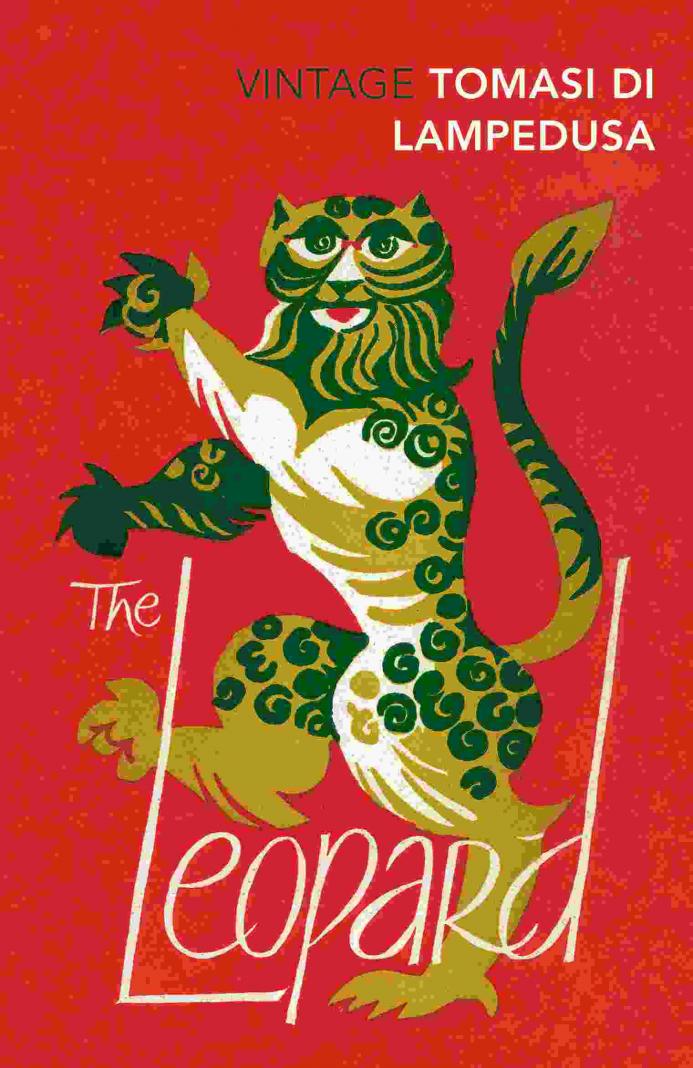
For starting this period we will change from now on the topic from language to literature. What is literature? Its definition is: "a highly developed use of language in that is the stylized manipulation of language for larger effect (purpose) and/or affect (emotional response)" (Language and Literature Course Companion p.9). We try our skills in literature by reading fragments of "The Leopard" by Giuseppe Tomasi di Lampedusa (1958) and "Notable American Women" by Ben Marcus (2002). After some time trying to comprehend the texts I realize that they were very difficult and we needed to focus a lot on what we were reading, finally our teacher said that actually they are difficult texts to understand considering that english is our second language. We conclude the class asking some questions for ourselfs:
For "Notable American Women":

For "Notable American Women":
- How important are the mythical references it gives?
- What are the relationships between the possible characters?
- Is it a good translation of Italian?
And for "The Leopard":
- What's "Father of Distinction"?
- About the last term, is it used literally?
- Why does the author put his name in the text?
Gender activity
We did a class activity to represent genders and how we stereotypize them in publicity and marketing. The activity was in pairs and I did it with my friend Matias Weitz (http://mweitzm.blogspot.com/). We choose to represent the female gender with the "Cachantun woman" publicity, unfortunately we couldn´t be able to do the same work for male gender because we were upsent that day.

With this activity I learned how can genders and their stereotypes can take part even in the publicity and make people buy that product because of how their gender is shown.
jueves, 23 de agosto de 2012
Suscribirse a:
Comentarios (Atom)