sábado, 20 de abril de 2013
Tobacco cartoon analysis
The cartoon shows a man from a tobacco company trying to convince a man who we suposse that has an important relevance in the business of advertisements in the country. The message that the man is sending implyes that health isn´t everithing in life and people should care about enjoying other things, because after all we live only once. It´s a persuasive and argumental message that we suppose that is making the man encharged think about the problem of the cigarette company restrictions. Because as we know in Chile and in other contries, the propaganda from cigarette companies is being restricted or even forbitten in others.

Summary of Lesson March 25: Ad Analysis
- Anti ads: Advertising against common ads, fighting against consumerism.
- Philantropic ads: Humanitarian or charity ads.
- Parody and pastiche: parody is seen as more aggressively satirical, and pastiche as a literary exercise.


http://www.answers.com/topic/parody-and-pastiche#ixzz2PbajE4xB
http://www.thefreedictionary.com/philanthropic
Internet Research: Rule of Three
By classical definition, great oratory is the felicitous product of style, substance and impact. That is, a masterful construction of words to create texts that are beautiful both to hear and read; a worthy theme that appeals, informs and inspires, and a memorable ability to open hearts, change minds, move nations.
- Lincoln's 1863 Gettysburg Address is still regarded by many as the most elegant, emotional, memorable blend of political content and style.
- Winston Churchill, “We Shall Fight on the Beaches”
- John F. Kennedy, “Inauguration Address”
The rule of three is a writing principle that suggests that things that come in threes are inherently funnier, more satisfying, or more effective than other numbers of things. The reader or audience of this form of text is also more likely to consume information if it is written in groups of threes. From slogans ("Go, fight, win!") to films, many things are structured in threes. Examples include The Three Stooges, Three Little Pigs, Three Billy Goats Gruff,Goldilocks and the Three Bears.
- Lincoln's 1863 Gettysburg Address is still regarded by many as the most elegant, emotional, memorable blend of political content and style.
- Winston Churchill, “We Shall Fight on the Beaches”
- John F. Kennedy, “Inauguration Address”
The rule of three is a writing principle that suggests that things that come in threes are inherently funnier, more satisfying, or more effective than other numbers of things. The reader or audience of this form of text is also more likely to consume information if it is written in groups of threes. From slogans ("Go, fight, win!") to films, many things are structured in threes. Examples include The Three Stooges, Three Little Pigs, Three Billy Goats Gruff,Goldilocks and the Three Bears.
Standard Desirable Attributes
- Television News report: Formal language, in most cases with no opinion by the people that present the news.
- Television opinion piece: May be formal or informal. People present their opinion on different topics, depending the programm.
- Newspaper editorial: Implyes formal language, showing facts and no opinions.
- Poiltical columnist blog: Implyes opinions from policy and may contain critic to other political stand.
- Celebrity profile in a magazine: Informal language, maybe nonstandard pronunciation. Informality and dialogue can be presented.
- Sport broadcast: they may use techinal and also coloquial language for expressing themselves about many sports.
- Political Speech: Formal language and the use argumental and persuasive techniques of language.
- Advertisment: depends on the type of ad, tryes to change people behaviour.
- Television opinion piece: May be formal or informal. People present their opinion on different topics, depending the programm.
- Newspaper editorial: Implyes formal language, showing facts and no opinions.
- Poiltical columnist blog: Implyes opinions from policy and may contain critic to other political stand.
- Celebrity profile in a magazine: Informal language, maybe nonstandard pronunciation. Informality and dialogue can be presented.
- Sport broadcast: they may use techinal and also coloquial language for expressing themselves about many sports.
- Political Speech: Formal language and the use argumental and persuasive techniques of language.
- Advertisment: depends on the type of ad, tryes to change people behaviour.
Activity: Ad Analysis CC p. 168

It´s an ironic advertising using formal language and an image, including all to seem like a real anouncement. It uses a serious tone for us to expect and think that it´s a real anouncement for the company, but while you read you will found out the ironic tone from the ad, saying that their products are so good that the only failure on one of their cars is on a product from a lot of decades ago and that they will be free to fix the problem. I realized the ironic tone when I saw the date of the car model in the text.
Summary Mass Communication, March 8th
Mass communication: is the study of how individuals and entities relay information through mass media to large segments of the population at the same time. It is usually understood to relate to newspaper, magazine, and book publishing, as well as radio, television and film, as these mediums are used for disseminating information, news and advertising.
Examples of mass communication:
http://en.wikipedia.org/wiki/Mass_communication
Examples of mass communication:
- newspapers
- radio
- TV
- Internet
- magazines
- ads
- films
http://en.wikipedia.org/wiki/Mass_communication
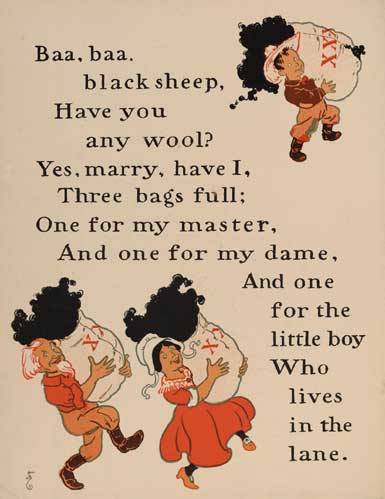
Activity: Remediating a Rhyme CC p.165
I analized this poem with my classmates and we got to the conclusion that it that there isn´t a relation in first instance between the images and text itself. This difference could be because of the tone of the poem, and this is related with the first question:1. How is the tone different in the two stories?
Because will we read the poem we figure a happy and childish tone, different that seeing the image´s tone (serious).
2. What are the limitations of tellin a story only with words?
I think when someone reads a text their mind has to think more to imagine the situation and understand. If the text implyies an image you give the receptors the real idea that your trying to communicate in the text.
3. f you saw the image without the rhyme, what would you say are the limitations of image as a means of storytelling?
I would hardly try to understand what the image is trying to communicate, but would be very difficult.
4. Must a story always change when transferred from one medium to another?
Yes, because it depends on the point of view and what is trying to express.
martes, 2 de abril de 2013
Register and style
As we´re studying language, we saw in class some items of how we use it in every situation, they are register, tone and style.
Register: is a variety of a language used for a particular purpose or in a particular social setting. For example, when speaking in a formal setting, an English speaker may be more likely to adhere more closely to prescribed grammar, pronounce words ending in -ing with a velar nasal instead of an alveolar nasal (e.g. "walking", not "walkin'"), choose more formal words (e.g.father vs. dad, child vs. kid, etc.), and refrain from using contractions such as ain't, than when speaking in an informal setting.
Tone: is the use of pitch in language to distinguish lexical or grammatical meaning—that is, to distinguish or inflect words. All verbal languages use pitch to express emotional and other paralinguistic information, and to convey emphasis, contrast, and other features.
Style: is a set of linguistic variants with specific social meanings. In this context, social meanings can include group membership, personal attributes, or beliefs.
.jpg)
Register: is a variety of a language used for a particular purpose or in a particular social setting. For example, when speaking in a formal setting, an English speaker may be more likely to adhere more closely to prescribed grammar, pronounce words ending in -ing with a velar nasal instead of an alveolar nasal (e.g. "walking", not "walkin'"), choose more formal words (e.g.father vs. dad, child vs. kid, etc.), and refrain from using contractions such as ain't, than when speaking in an informal setting.
Tone: is the use of pitch in language to distinguish lexical or grammatical meaning—that is, to distinguish or inflect words. All verbal languages use pitch to express emotional and other paralinguistic information, and to convey emphasis, contrast, and other features.
Style: is a set of linguistic variants with specific social meanings. In this context, social meanings can include group membership, personal attributes, or beliefs.
.jpg)
Test practice: Academic Writing
I would say that I agree with the motion. I think the media has a very considerable influence on people, specially the ones with less or none education, that may believe things easier that more educated people. So the people who have the control on media can change or rectify many opinions and attitudes. For example in countries with a communist system (Cuba, North Korea) the media is controled by the government, so most of the population on that countries doesn`t have access to news and information about what`s happening in other countries, and also are full of publicity of their own government on the media. Particularly in Cuba they can only see two TV programs: one that shows Fidel Castro (dictator) speechs all day, and a normal channel, but controled also by the government; the same with the radio and newspaper (they don`t have many access to Internet).
By these arguments, I would rather conclude that my hypothesis has been proved. The media has a very considerabe influence en people.
Mc Donald´s advertisement
Analize the following questions from this advertising spot:
1) Who created this advertisement?
2) Is this advertisement attractive or enticing? What particular techniques are used to get attention, affect emotion, or entertain?
3) What values are represented in this advertisement?
4) What point of view is left out in this advertisement?
5) What is the purpose of this advertisement?
1) The Mc Donalds company.
2) Yes, because they show a big and tasty hamburger. It tryes to communicate (as a joke) that the only thing you have left from your hands its a finger, because its huge and so tasty that you will have to eat it at every time.
3) I think that there isn´t a value on this ad, it shows like the opposite of a value.
4) Maybe the point of view of people that wants a healthy life (without eating such a giant hamburger)
5) To show the public the huge and tasty hamburgers that they have, so they can sell.
1) Who created this advertisement?
2) Is this advertisement attractive or enticing? What particular techniques are used to get attention, affect emotion, or entertain?
3) What values are represented in this advertisement?
4) What point of view is left out in this advertisement?
5) What is the purpose of this advertisement?
1) The Mc Donalds company.
2) Yes, because they show a big and tasty hamburger. It tryes to communicate (as a joke) that the only thing you have left from your hands its a finger, because its huge and so tasty that you will have to eat it at every time.
3) I think that there isn´t a value on this ad, it shows like the opposite of a value.
4) Maybe the point of view of people that wants a healthy life (without eating such a giant hamburger)
5) To show the public the huge and tasty hamburgers that they have, so they can sell.
Suscribirse a:
Comentarios (Atom)

.jpg)