martes, 30 de octubre de 2012

TASK 2: Analysis of 3 quotes from Chapter 3

The last task of the week was the analysis of 3 quotes, for this oportunity Mr Barriga shared his quotes with me and I analyzed them with a technique that we have used a lot on the recent activities or tasks, the PEE structure.

First quote:  "When the bus braked very suddenly, and then I heard from outside snatches of a voice issuing orders (...) to the effect that any Jewish passenger who happened to be on the bus should get off" (Page 40) 
This situation is narrated by George who felt surprize as the other passengers of the bus, I deduce that feeling vulnerable and with fear because not knowing their next destiny or whatever was going to happen with this sudden stop.

Second quote:  "I once asked him what he found so great about smoking so much, to which he gave the curt reply, 'It's cheaper than food'. I was slightly taken aback, since such a reason would never have occurred to me." (Page 42). 
This situation in particular is shocking for George "slightly taken aback", he was realizing how serious was the situation in that place, feeling sad and hoping to not fall in the same.

Third quote: "They led us into a maze of gray buildings, before we suddenly debouched onto (...) some sort of barracks parade ground." (Page 56). 
This is a critical moment of the novel, when the situation start torning diferently for George, he will now is going to face a new part of his life.

Seven pillars to Judaism

A mezuzah is affixed to the doorframe in Jewish homes to fulfill the mitzvah (Biblical commandment) to inscribe the words of the Shema "on the doorposts of your house" (Deuteronomy 6:9). Some interpret Jewish law to require a mezuzah on every doorway in the home apart from bathrooms, and closets too small to qualify as rooms. The parchment is prepared by a qualified scribe (a "sofer stam") who has undergone many years of meticulous training, and the verses are written in black indelible ink with a special quill pen. The parchment is then rolled up and placed inside the case. 

Tefillin are a set of small black leather boxes containing scrolls of parchment inscribed with verses from the Torah, which are worn by observant Jews during weekday morning prayers. Although "tefillin" is technically the plural form (the singular being "tefillah"), it is loosely used as a singular as well. The hand-tefillin, or shel yad, is placed on the upper arm, and the strap wrapped around the arm, hand and fingers; while the head-tefillin, or shel rosh, is placed above the forehead. The Torah commands that they should be worn to serve as a "sign" and "remembrance" that God brought the children of Israel out of Egypt.

A shofar (Hebrew: שופר‎) is a horn, traditionally that of a ram, used for Jewish religious purposes. Shofar-blowing is incorporated in synagogue services on Rosh Hashanah and Yom Kippur. Shofar come in a variety of sizes. 

Hanukkah (Hebrewחֲנֻכָּה‎‎, Tiberian: Ḥănukkāh, usually spelled חנוכה, pronounced [χanuˈka] in Modern Hebrew; a transliteration also romanized asChanukahChanukkah or Chanuka), also known as the Festival of Lights, is an eight-day Jewish holiday commemorating the rededication of theHoly Temple (the Second Temple) in Jerusalem at the time of the Maccabean Revolt of the 2nd century BCE. Hanukkah is observed for eight nights and days, starting on the 25th day of Kislev according to the Hebrew calendar, which may occur at any time from late November to late December in the Gregorian calendar.

Kosher foods are those that conform to the regulations of kashrut (Jewish dietary law). Food that may be consumed according to halakha (Jewish law) is termed kosher in English, from the Ashkenazi pronunciation of the Hebrew term kashér (כָּשֵׁר), meaning "fit" (in this context, fit for consumption). Food that is not in accordance with Jewish law is called treif (Yiddishטרײף or treyf, derived from Hebrew טְרֵפָה trēfáh).

Tzedakah, or Ṣ'daqah in Classical Hebrew (Hebrewצדקה‎; Arabicصدقة‎), is a Hebrew word literally meaning righteousness but commonly used to signify charity. It is based on the Hebrew word (צדק, Tzedek) meaning righteousnessfairness or justice, and it is related to the Hebrew word Tzadik meaning righteous as an adjective (or righteous individual as a noun in the form of a substantive). In Judaismtzedakah refers to the religious obligation to do what is right and just, which Judaism emphasises are important parts of living a spiritual life.

Sabbath or a sabbath is generally a weekly day of rest or time of worship observed in Abrahamic religions and other practices. Many viewpoints and definitions have arisen over the millennia. The term has been used to describe a similar weekly observance in any of several other traditions; the new moon; any of seven annual festivals in Judaism and some Christian traditions; any of eight annual pagan festivals (usually "sabbat"); an annual secular holiday; and a year of rest in religious or secular usage, originally every seventh year.


Source: Wikipedia.com

Weekly summary: October 16th

This week, we started doing the review of the activity of the last week: http://englishhagedorn.blogspot.com/2012/10/literary-analisis-worksheet.html , we could se our mistakes for doing a better job the next time we have the oportunity, I really apreciate that!
Next on this week, we did an activity for knowing more things about the Jews (culture, religion), se we did an online research of terms about the tradition called "Sabath".
Finally, we did the the second task that consisted on analyzing three quotes from Chapter 3, for me it was the best activity on this week because we could use our narrative new skills and techniques, for example the PEE structure.

Great week!

Written task: "Dear all"


Dear teacher and dear class:

     
       I´m writing this letter for you to know my situation on this moment, as you must know as I´m a Jew I´ve been sent to work on a factory because of the war and the Nazis government, that´s why I left school as the other Jew boys. My yellow star, my religion and believes are now deciding my destiny. Before you come with any prejudices, I have to say that the only reason I´m writing this letter is for you that are most of my loving people to know about my actual situation. I don´t want you to feel sorry for me or anything like.
     First of all, I want to tell you that I miss very much the school and you my classmates; to wake up in the morning, walk and wait outside the classroom with a terrible cold, to say good morning to the teacher, to listen to the jokes in the class, to play hide and seek, even to listen to the boring classes of grammar, every detail, every little thing from school. Now, I also have to apologize because of not saying good bye to all of you in person, I didn´t take the relevance of the situation and I hope you´ll understand if you never get to see me again.
        For starting I will tell you what I do everyday instead of going to school. I wake up every morning very early and take a bus with more Jew people, I don´t know exactly how much time we travel but I know that is very far from town. I get together with a group of more a less eighteen boys of around my age, the workplace is in a place called Csepel, at a company called “Shell Petroleum Refinery Works”. I´m living a very ironic situation; I have a privilege because of working here, I´ve acquired identity papers to travel outside city limits, for other people wearing yellow stars this is firmly forbidden. If you think that this is going worst you are wrong, actually the work is very entertaining, it consist on assisting with bricklaying duties, we have to make good damage done by an aircraft. The foreman whom has been put under, treats us decently so at the moment, making a balance, the situation is not so bad and I try to look always the positive side of things. As my uncle Lajos advised to me after I left; “we must accept God´s ordinances in regard to us”. As you may not believe, my behavior had been outstanding on the factory, I can´t complain so much, the work isn´t particularly strenuous and I have some entertainment with my other Jew partners. The work isn´t so bad, I have other problems on my head that have nothing to do with the Nazis or for being Jewish. My father left the city to work in another place and I´ve been receiving letters from him and he is fine. Now, my mother and stepmother are causing me trouble with the love and things like that and I´m not really interested actually. By the way, I thought a lot about telling you this but a few days ago I had my first kiss! It was a particular situation with a girl from where I live, her name is Annamarie and she is also Jewish. During the alert from Friday night we began closer than before, we kissed, so I believe that we were in a sort of relationship. If we ever meet again I can tell you the details! Suddenly all this “love story” ended because of her sudden behavior change and I guess because I argued with her older sister about a personal issue from her. I´m not sure, I waited for her without realizing how important was that issue for her and her family, I only presented my opinion from my point of view and I feel proud about it. Although I feel bad about the situation, Annamarie was a great company for these moments and I miss her, not saying that I´m in love and she broke my heart but I liked spending time with her and do all the kissing.
       Far enough this have been my live since I went that day to school to excuse myself with a letter communicating my “family reasons”, now you know everything, hope I will not regret if I come back and you start mocking about Annamarie. I´m sorry if I told to much personal information, but as I said before you are the people that I care the most and if I have to confess something I will always do with you. I really don´t want this to be the last communication between us, but as you must know I may will be sent to a concentration camp or to labor service and are places in which survival is for the luckiest people. I will do my best for being one of them and have the opportunity to see you all again. If I don´t, consider this as my good bye and always try to remember me wherever you go.
Proudly accepting any destiny,

George.

Rationale:

I have chosen to write a letter from George to his teacher and class of the novel “Fatelessness”. I did this because I think that writing a letter is the best way for doing a free narration of the events of the few chapters that we have read already, as I used a letter I´m free to create new details from the characters and also support information by reading the novel.
The audiences for the letter were the teacher and George classmates. The language used on the letter is mostly formal because of the presence of the teacher in the audience, perhaps it have some informal language when George directs specifically to his classmates. He tells a lot of information that could consider “personal” so it has to be considered that the relation between George and his class is very close.
It was used on this letter some aspects that we studied on the course. The tone used is likely serious and formal in some parts or in another ironic/happy and informal. The letter take different tones and modes, this happens because of the affective relation between author-audience and also the sensitive issues from George´s life that produces changes.
In the letter George refers to his objective by writing the letter so we have clearness on that sense that he only wanted to communicate his situation, in any case produce sensitiveness to the audience. Perhaps this we can think by the way the author express himself that is an affective letter and may produce emotions from the audience.
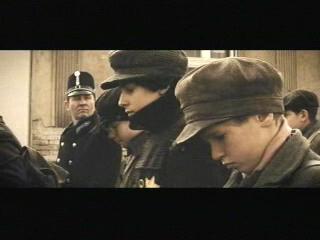
The task is set on the end of the Chapter 2 when supposedly George writes a letter for his classmates and teacher. At this part of the novel, George (Jew boy) was working on a factory because of the Nazis government (ideology of anti-Semitism) and not assisting anymore to the Grammar school. The Jews were obligated to work and to go to concentration camps. The actions are happening on the 1940´s on the beginning of the Second World War and the Holocaust. 
lunes, 29 de octubre de 2012

Literary analisis worksheet

Title of selection: Fatelessness (Chapter 2)

Author: Imre Kértesz

Genre: Novel

Setting: Budapest, Hungary, 1940´s

Historical context: II World war, German Holocaust (antisemitism)

The author wrote this piece to(author´s purpose): Tell and inform about the aspects of George´s life after his father had left.

The main idea of this piece is: To make the readers notice the sicological aspects and changes on George that is recently a teenager, not expressing any feeling fot the situation of his father and his sort of girfriend.

The message (or theme) of this selection which the author would like us to "take away" is: I think, as I had personal dificult moments on my life, that the reaction on a male teenager is to hide his feelings and pretend to be strong enough to face it. I personally think that is the situation of George at that traumatic moment of his life.


Characters (Major Protagonist): George Koves

Antagonist: I thought about three antogonists: George´s mother, Steiner´s daughter and the Nazi regime.

Static character: The best example is Mr Suto who maintains by all the chapter his way of thinking and interests.

Dynamic characters: George Koves and Annamarie.

Did the author use any special literary devices in this selection such as: personification, metaphor, simile, foreshadowing, suspense, flashback, imagery, irony, humor, poetic sound devices such as rhyme, etc... List and give specific examples:

There are not much literary devices on the text, I will precise one that seem interesting for me
Irony: "As a result, I have acquired a privilige of sorts, (...) I may cross the Csepel customs borderline" (28) This quote is an irony precising George´s luke. When he was free he could pass any bounds of the country, now it was a privilige for him to have the autorization to pass a limit.

What was the author’s “tone” toward the subject/person/idea he wrote about? 

I think that George´s tone as the narrator is likely informal and serious. "Already two months passed since we said good-bye to father" (27)

What “point of view” was this piece told from? List word clues that indicate this. 

I think George (narrator) has a diferent way to see things as many people, for example Annamarie´s sister. He is very direct to tell things and not demostrating much feelings to the circumstances his living.

List of the conflicts in this selection (internal and/or external)

As an internal problem I think that could be the discusion between George and Annamarie´s sister and an external may be his thoughts about his mother.


Weekly summary: October 8th

For this week, before we analized "Fatelessnes" furthermore, we made a review of some literary terms like the rethorical devices and other concepts. It´s very important to remember these literary terms because they are present on all the texts we read an write and are techniques for a good writing.
We described and review the following devices: allegory, aliteration, alusion,, climax, connotation, dennotation, flashback, foreshadowing, gothic, hero, hyperbole, lyric poem, metaphor, nnarative poem, onomatopeia, personification, plot, point of view, setting, simile, soliloquy, stanza, symbol, theme, thesis, tone and understatement.


Also we remembered the difference between tone and mood, se we described both of them:
TONE is the author’s attitude towards the writing (his characters, the situation) and the readers. A work of writing can have more than one tone. An example of tone could be both serious and humorous.
MOOD is the general atmosphere created by the author’s words. It is the feeling the reader gets from reading those words. It may be the same, or it may change from situation to situation.

For finishing the week we used our new terms to complete a worksheet about the book, I´m going to show that on my next post.
I have to say that this was a great week for our learning, we review a lot of terms that we forgot by the time and use our knowledge to do an activity about the book "Fatelessness".

domingo, 28 de octubre de 2012

Summary of Narrative techniques

Before the analysis of the chapters of the novel "Fatelessness" we will review some narrative techniques.
Use of quotation:

  1. Read through the quotation.
  2. Identify the speaker, listener, and context of the quotation.
  3. Examine the quotation carefully
  4. Pull all of your ideas into one strong, cohesive response.
      1. Don’t forget the “HOW/WHY” rule: explain how and why the quotation is important.

The functions of a setting:
1. To create a mood or atmosphere.
2. To show the reader a diferent way of life.
3. To make an action seem more real.
4. To be the source of conflict or struggle.
5. To symbolize an idea.

Other narrative techniques:
-Flashback
-Foresahdowing
-3rd person omniscient
-Dual narrative

Anne Frank: Historical facts


Anne Frank was one of over one million Jewish children who died in the Holocaust. She was born on June 12, 1929, in Frankfurt, Germany, to Otto and Edith Frank. 
For the first 5 years of her life, Anne lived with her parents and older sister, Margot, in an apartment on the outskirts of Frankfurt. After the NAZI seizure of power in 1933, they fled to Amsterdam.
The Germans occupied Amsterdam in may 1940, deporting Jews to Auschwitz-Birkenau and Sobibor killing centres in German-occupied Poland.
During the occupation, Anne and her family went to hiding in a secret attic apartment behind the office of the family-owned business. They stayed there for two years.
On August 4, 1944, the Gestapo (German Secret State Police) discovered the hiding place. The Franks were sent by train along with other Jewish prisoners to The Auschwitz Concentration Camp Complex. Due to their age, the two girls were transferred to the Bergen-Belsen Concentration Camp, where they both died of typhus in March 1945, just a few weeks before British troops liberated it. The girls' mother, Edith, also died in Auschwitz. Only Otto, the father, survived the war.
Historical facts:
-Life in Germany (1925)
-Emigrating to the Netherlands (1933)
-The German invasion (1940)
-The hiding place (1942)
-Start writing the diary (1942)
-The arrest (1944)
-Otto Frank returns (1947)
-The diary is published

Listening Task (Interview to Imre Kertész)

I will answer some questions of a video-interview from the author of "Fateless" Imre Kertész.

https://www.youtube.com/watch?feature=player_embedded&v=Cl7eFs755Ak

1. Before the interview, the presenter visits a monument to the Holocaust created by the American artist Peter Eiserman. Considering the shapes, architecture and general design, in what ways do you think he represents the reality in the concentration camps?
2. Which is the paradox the presenter mentions regarding Imre Kertész and the place where he lives?
3. Refer to antisemitism before and after Auschwitz according to Kertész.
4. In what way do reminders of the past in historical books make us "much richer"?
5. Which metaphor does Imre use to exemplify the effect of FATELESSNESS on its readers?

1- The tall walls, the sense of being capture with no exit and the fear of don´t knowing if you are going to die the next day..
2- The paradox is that Imre feels more confortable in Germany than in any place, and  decades ago Germany wanted to kill him-
3- He says that the antisemitism was present before and after Auschwitz and Hitler. It was a everyday issue.
4- To aknowledge an event that toke place on the past we can use books or "reminders of the past" to make our knowledge of the event "reacher".
5- If we don't know about the Holocaust, it will be like a box in your soul, that eventually will come free and start those atrocities again and again.

Your Holocaust Timeline using Timetoast


Weekly summary: October 1st

This week we explored the novel "Fatelessness" with more bibliographical information and start reading the book.
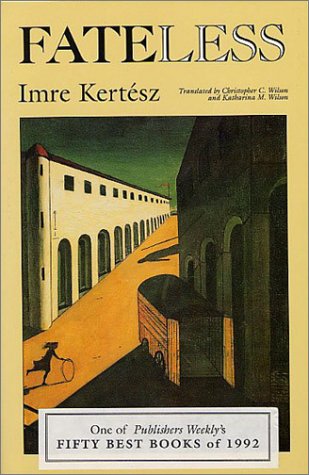
 Fatelessness" is an autobiographical novel written by the Hungarian writer Imre Kertész (b.1929). It is a disturbing literary memoir about the Holocaust written from the point of view of George Koves, a Hungarian Jewish boy, who endures the German concentration camps during the Second World War. George responds with childish optimism to the horrific logic of that world and examines satirically the development of his own moral and intellectual reflections.
Fatelessness is also a psychological and historical novel about identity andfreedom and a powerful testimony of the role of memory in modern European culture. Adapted from <http://www.kakanien.ac.at/rez/MBorden1.pdf>

The next things we do were watching a video from the author telling his testimony and also a quotation activity for improving our English. On this week we started reading this "Nobel prize" book, I hope its a good one.


Weekly summary: September 27th

This week we started to get involved on the historical context and the context of production of the novel "Fatelessness" by Imre Kertész. For this, we went back to the IB program to the unit of "Texts and contexts"  for a review to start learning with this novel and all the issues it implyes.
As we finished with the review of "Texts and contexts" techniques and skills, we started doing activities to get closer with the main topic of the novel; the Holocaust.
- Image analysis
- Watching videos
As we were finish I could get a general idea of what the novel is about and explore very good the historical and production context. 

https://www.youtube.com/watch?feature=player_embedded&v=4FzluLLFVMs

"Men writing as women and women writing as men"


Charles Dickens
In Bleak House modest, virtuous Esther Summerson tells the story of her involvement in the tortuous lawsuit of Jarndyce vs Jarndyce. The heartstrings are tugged when she tells us of losing her bloom after catching smallpox, but we know that her author will pair her up with the handsome young doctor.
Lloyd Jones
Jones re-envisions Dickens's Great Expectations in a novel set on an island off Papua New Guinea. Mister Pip is narrated by 13-year-old Matilda, who becomes obsessed by the novel when it is read to her by Mr Watts, the last white person she knows. She sympathises painfully with Dickens's Pip, but can never quite be like him.
What are the benefits and limitations of this approach?
Why do other authors, like McEwan, take the opposite approach?

I think that the benefits are depending the situation, but if the author is writing by the opposite sex, we may think that it will have benefits. The limitations I think that are principally not thinking as a male/female, we have diferent point of views and ways to expresse ourselves, that is the principal difficulty.
Its natural that an author is writing about a character of the same gender, when the authors do the opposite, they have to think that on that way their novel or short story will be better written.


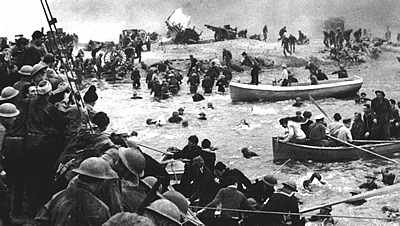
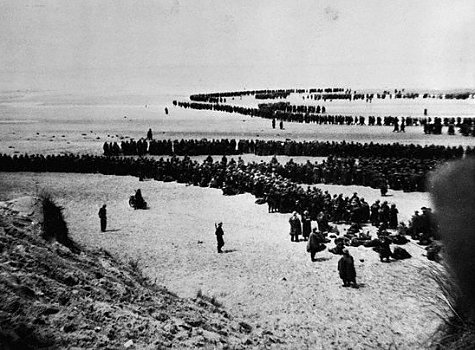
Dunkirk Evacuation: Summary of historical facts

The Dunkirk evacuation, commonly known as the Miracle of Dunkirk, code-named Operation Dynamo by the British, was the evacuation of Allied soldiers from the beaches and harbour of Dunkirk, France, between 27 May and the early hours of 4 June 1940, because the British, French, and Belgian troops were cut off by the German army during the Battle of Dunkirk in the Second World War. The evacuation was ordered on 26 May. In a speech to the House of CommonsWinston Churchill called the events in France "a colossal military disaster", saying that "the whole root and core and brain of the British Army" had been stranded at Dunkirk and seemed about to perish or be captured. In his We shall fight on the beaches speech on 4 June, he hailed their rescue as a "miracle of deliverance".

Due to war-time censorship and the desire to keep up the morale of the nation, the full extent of the unfolding "disaster" around Dunkirk was not publicised. However, the grave plight of the troops led King George VI to call for an unprecedented week of prayer. Throughout the country, people prayed on 26 May for a miraculous delivery. The Archbishop of Canterbury led prayers "for our soldiers in dire peril in France". Similar prayers were offered in synagogues and churches throughout Britain that day, confirming the public suspicion of the desperate plight of the troops.
Initial plans called for the recovery of 30,000 men from the British Expeditionary Force (BEF) within two days, at which time it was expected that German troops would be able to block further evacuation. Only 25,000 men escaped during this period, including 7,000 on the first day. Ten additional destroyers joined the rescue effort on 26 May and attempted rescue operations in the early morning, but were unable to closely approach the beaches, although several thousand were rescued. However, the pace of evacuation from the shrinking Dunkirk pocket steadily increased.
On 29 May 47,000 British troops were rescued in spite of the first heavy aerial attack by the Luftwaffe in the evening. The next day, an additional 54,000 men were embarked, including the first French soldiers. 68,000 men and the commander of the BEF—Lord Gort—evacuated on 31 May. A further 64,000 Allied soldiers departed on 1 June, before the increasing air attacks prevented further daylight evacuation. The British rearguard left the night of 2 June, along with 60,000 French soldiers. An additional 26,000 French troops were retrieved the following night before the operation finally ended.
Two French divisions remained behind to protect the evacuation. Though they halted the German advance, they were soon captured. The remainder of the rearguard, largely French, surrendered on 3 June 1940. The next day, the BBC reported, "Major-General Harold Alexander [the commander of the rearguard] inspected the shores of Dunkirk from a motorboat this morning to make sure no-one was left behind before boarding the last ship back to Britain."
DateTroops evacuated
from beaches
Troops evacuated
from Dunkirk Harbour
Total
27 May7,6697,669
28 May5,93011,87417,804
29 May13,75233,55847,310
30 May29,51224,31153,823
31 May22,94245,07268,014
1 June17,34847,08164,429
2 June6,69519,56126,256
3 June1,87024,87626,746
4 June62225,55326,175
Totals98,780239,446338,226
There is the information about the historical facts of the "Dunkirk evacuation" taken from www.wikipedia.com , it´s a very interesting fact of the IWW, for me, that I like very much the History, I had heard about the situation but never read and watch so much about it, son I´m greatuful about  doing this activity =)

Weekly summary: September the 4th

As I posted a few days ago wee saw the movie "Atonement" http://englishhagedorn.blogspot.com/2012/10/back-to-school-movie-atonement.html (activity). I didn´t like so much this movie because of the girl called Briony, in some scenes I rather felt scared about her and the way she tought, that ruin a young man´s life that ended on his death. It´s actually about this young man´s (Robbie) death that we talked about later and it happened on the Dunkirk evacuation (First World war). I´m going to write about it on my next post.
To conclude, this was more of a relaxing week when we could learn by watching a movie and analyze an Historical situation that had relation with the death of one of the principal characters. Great week!


Task 2: Jane Austen and women emancipation

1. What degrees of emancipation and/or conservative reinforcement of 18th-Century family values does Elizabeth Bennet's marriage to Mr. Darcy support?
2. What attitudes to marriage does 'Pride and Prejudice' convey? What other options did Elizabeth Bennet have?
3. How does the introduction made by Vivien Jones affect your reading and approach to the novel?
4. How could the social circumstances and contexts of 'Pride and Prejudice' apply to different cultures and contexts today?


1- She was different from the women of that time, quite a liberal woman against the status quo. It demostrate on her way of living and her thinking.
2- The status quo of women of that times was to get married young, otherwise they are rejected from society.This story doesn´t follow that status and ends with a happy ending and true love from the characters.
3- It make us get closser to the context of production and the understanding of the novel, which is very difficult to understand by the way. I think that without the introduction I would have to read the text at least three times to reach an acceptable understanding.
4- Like I said before, these adjectives are the bases of the English society of that times, but not only the English people, I think that all humans on the world are living day by day with the "pride and prejudice".

Task 1: Clip Analysis questions

1. Why do you think "Pride and Prejudice" continues to be a referent for modern tales? 
2. What do you think is the effect that these different authors (film directors, producers, modern writers) want to achieve in today's audiences?
3. If you had to choose one of the previous versions to analyse, which would be the one and why?
1- Because it´s a very good novel, it describe the English society of that time based on the two adjectives on the title of the novel; pride and prejudice. This may explain why this novel is a referent of modern tales.
2- I personally think that because this is a classic novel and a traditional story, all authors know that with this parodies they will have repercusion from the audience and achieve success.
3- I would choose the traditional version because I´m more interesed on classic tales that I will be able to learn social issues of that times.

Weekly summary: August 31

This week we learned about the social context on the mid-19th century in England only by analyzing a novel! The novel is called "Pride and prejudice" and this was our primary source to analize the social context on that time, for our good the novel had a lot of explanation of its context and we could identify quotation marks about it. “It is a truth universally acknowledged, that a single man in possession of a good fortune, must be in want of a wife.” 
Pride and Prejudice is a novel by Jane Austen, first published in 1813. The story follows the main character Elizabeth Bennet as she deals with issues of manners, upbringing, moralityeducation, and marriage in the society of the landed gentry of early 19th-century England. Elizabeth is the second of five daughters of a country gentleman living near the fictional town of Meryton in Hertfordshire, near London
https://www.youtube.com/watch?feature=player_embedded&v=fJA27Jujzq4


Weekly summary: August 27th

This week we studied more techniques to improve our English! The PEE structure and the use of quotation. We will start using this techniques on the next activities of the class.
PEE strucuture and quotation:
For analizing a text we can always use the PEE structure and quotation marks to clarify our ideas and opinions.
For example:
Point: Harry Potter was a friendly boy.
Evidence (quotation): "Harry arrived to the train and sitted with a boy called Ron, they instantly started to be friends" (57)
Explanation: We can prove with the evidence "Harry was a friendy boy" because at his first experience on a train he made a friend "instantly".

By using this tecnnique we will improve our English skills and we will me able to prove always our point!

martes, 23 de octubre de 2012

Chapter 1 Analysis: "Fatelessness"

I will answer some questions for you to see my understanding of the first chapter of the book "Fatelessness"

1.  What characters are introduced in this chapter?
The characters introduced on this chapter are George Koves (main character), his parents, his stepmother, his uncles, his teacher, the baker and his wife, Annamarie and Mr Suto.

2. Choose two characters and select a quote to describe them physically or psychologically.
"asking Mr Suto to give my stepmother the benefit of his business experience and expertise over these" Describe Mr Suto abilities in businees (7)
"He did not bother returning my greetings as it is well known in the neighbeirhood" (8) Describing the Baker´s hate among Jewish people

3. What is the narrative technique? Provide evidence

Its a narration in first person like is it prove on the first sentence of the book "I didn´t go to school today" (Point of view)
The narrator is telling the story like if it was a diary for himself, with no constant dialogs between characters (only quotations), a constant narration of the story. (Narration) "Or else so that "he might have me there on his last day before being separated from home" since he said that too..."
The (Speech) is indirect by the characters because it is all quotated by the narrator (same example above)
Past (Tense) "I didn´t head home but to our shop"

4. Describe the setting of this chapter

The story takes place on the city Budapest(Hungry) around 1940 when the WW2 is just starting and Hitler is taking over a lot of countries (III Reich), that´s why the characters are involved in this discrimination issues.


Image analysis


Before start reading the book "Fatelessness" we did an activity that consisted on choosing an image in relation to the Nazis and the Holocaust situation. I chose the image that is shown above, after some time for the observation process we started infering facts abour it:

a) The Nazi people are above the image because of their "racial superiority" based on their ideology.
b) The guns at the sides are the instruments of strenght over the rest.
c) The Nazi symbol at the centre because of what it represents for the Nazis (the most important)

Questions:

The image doesn´t produce on me any question.

Describe the mood of the image. Use specific details from the image to support your answer.

It makes me feel sad on one side because of the represion and sacriface over some specyfic groups of people. In another hand, as I´m German I feel proud about what the country could achieve on those years (territorry, population, etc), not defending the "how".

What information do you already know about the Holocaust?

I´ve acquired a lot of knowledge about the WW2 and the Holocaust because I belong to History IB with Mr Silvio Bermúdez. I´m informed with details about a lot of situationns experienced on the Holocaust.